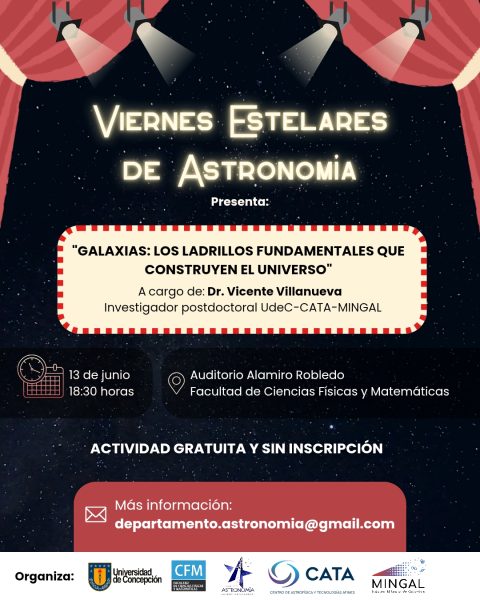
Con un recorrido por las galaxias Departamento de Astronomía UdeC inaugura nuevo ciclo de charlas de los “Viernes Estelares de Astronomía”
Un año más, astrónomos/as y científicos/as del área compartirán con la comunidad diversos conocimientos sobre el Universo en la ya tradicional actividad científica organiza por el Departamento de Astronomía de la Universidad de Concepción.
Este viernes 13 de junio se inicia nuevamente otro periodo más de los tradicionales “Viernes Estelares de Astronomía”. En esta ocasión, se llevará a cabo la charla “GALAXIAS: Los ladrillos fundamentales que construyen el Universo”, a cargo del astrónomo Dr. Vicente Villanueva.
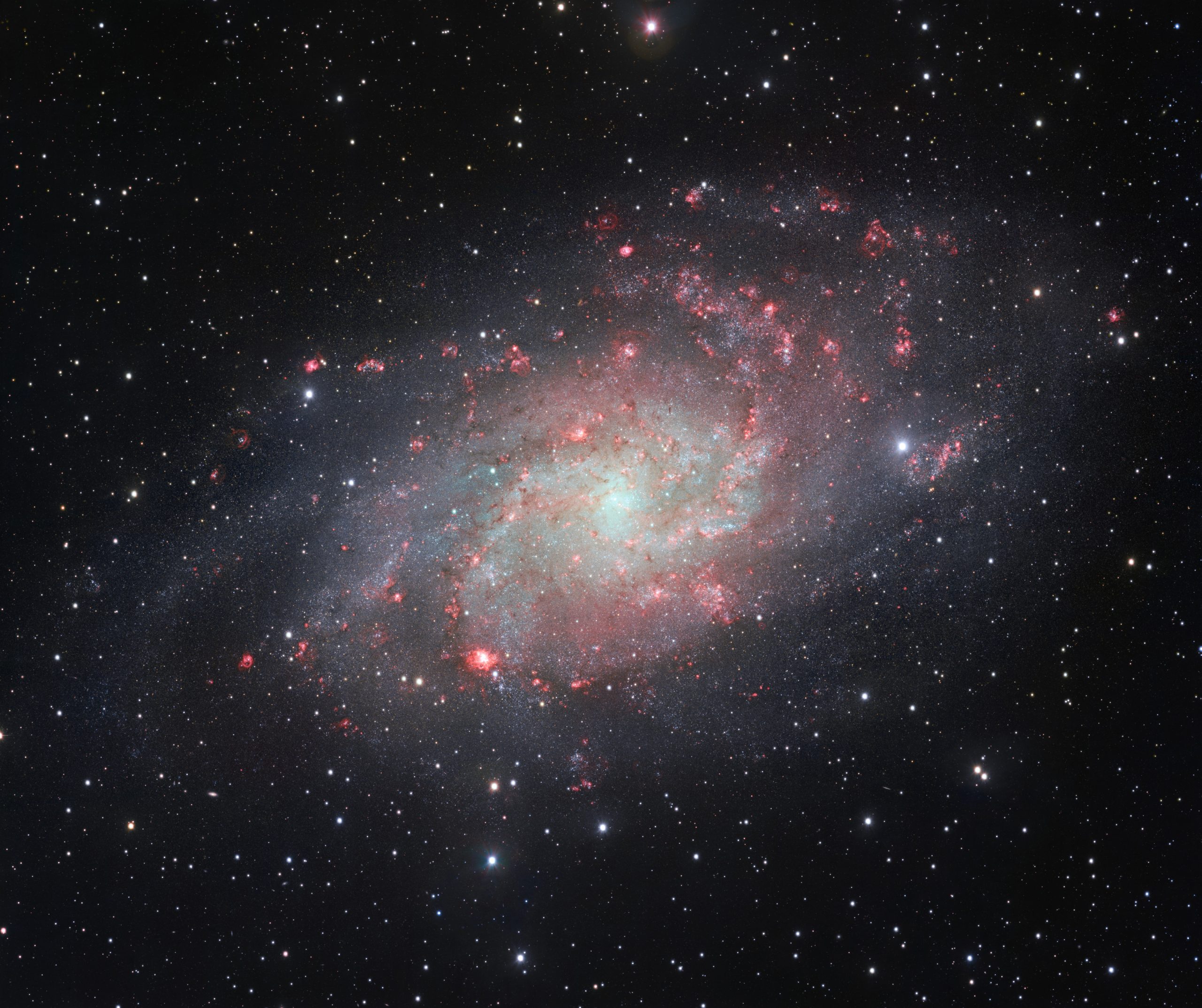
Según comenta Villanueva, “Así como los ladrillos se ordenan para la construcción de una casa, las galaxias son los bloques fundamentales que conforman el Universo. Cuando se reúnen pueden formar grupos de galaxias, conteniendo una fracción significativa de la materia conocida en el Universo”, explica el también investigador del Centro de Astrofísica y Tecnologías Afines, CATA.
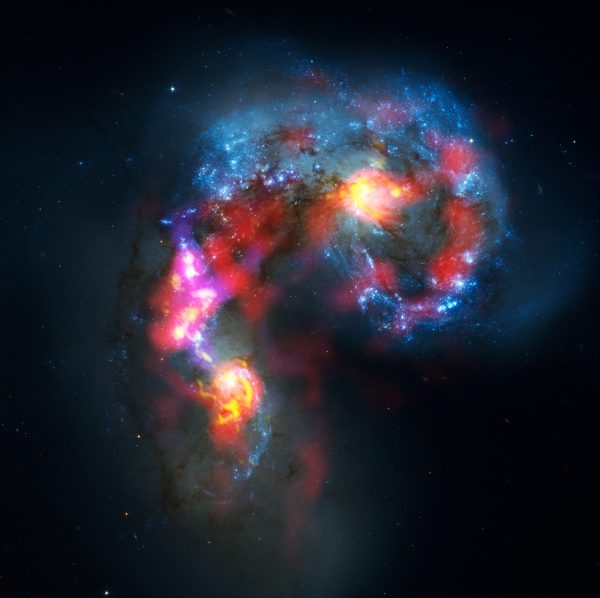
Durante la charla, las y los asistentes conocerán sobre los aspectos principales de las galaxias, sus componentes esenciales, sus estructuras más prominentes, morfologías, los telescopios que se utilizan para analizarlas, y el estado actual de su estudio para entender a grandes rasgos lo que se ha aprendido a partir de su investigación en los últimos años.
Vicente Villanueva Llanos es académico del Departamento de Astronomía UdeC, e Investigador del Núcleo Milenio de Galaxias, MINGAL. Es Licenciado en Ciencias, mención Astronomía, de la Universidad de Chile, con Master en Astrofísica, en la Universidad de Valparaíso y Master en Astronomía de la Universidad de Maryland – College Park y doctor en astronomía de la misma universidad. A lo largo de su carrera, se ha especializado en el análisis de las condiciones físicas del gas, el polvo y las estrellas, y cómo afectan a la actividad de formación estelar en muestras de galaxias del Universo local y temprano.
La invitación es entonces para el próximo viernes 13 de junio a las 18:30 horas en el Auditorio Alamiro Robledo de la Facultad de Ciencias Físicas y Matemáticas de la Universidad de Concepción. Actividad gratuita, sin inscripción y abierta a todo público.